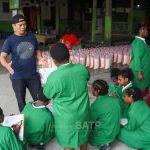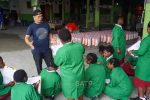
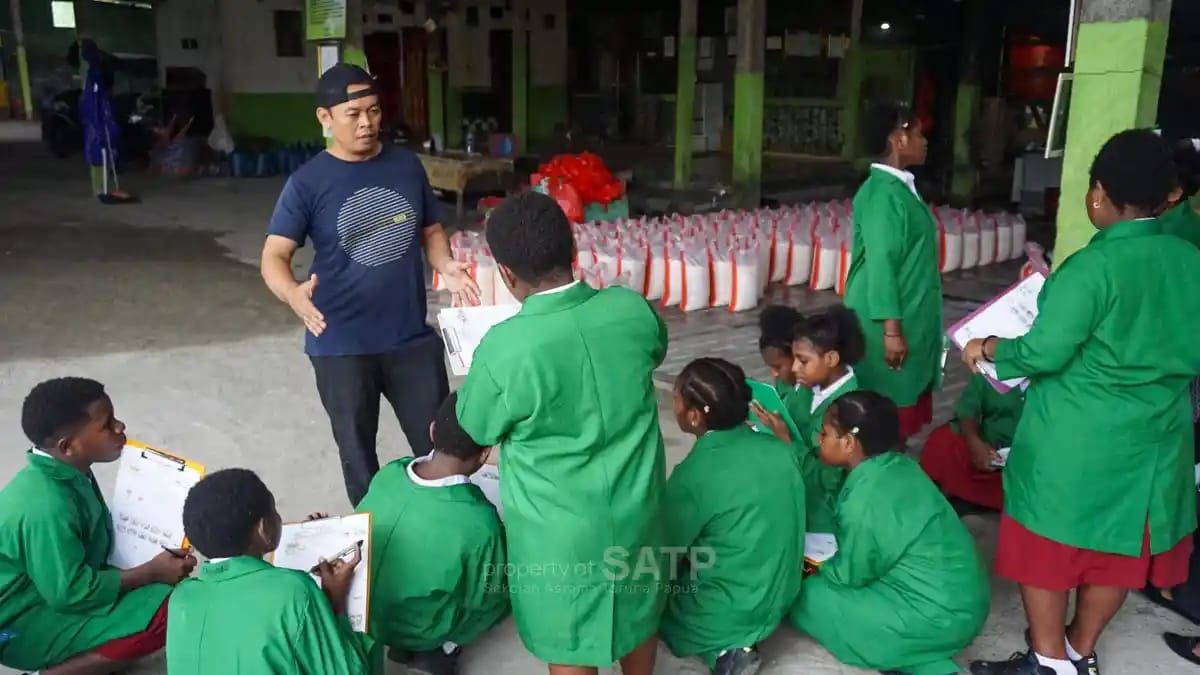
TIMIKA, CENTRAL PAPUA — Introducing students to local food resources and cultural heritage is an important part of connecting classroom learning with real-world experiences. Sixth-grade students from SD Taruna Papua recently visited the CV Makmur sago processing plant in Timika to learn about the production of one of Papua’s traditional staple foods.
The field trip provided students with an opportunity to broaden their knowledge beyond the classroom while gaining firsthand insight into the stages involved in processing sago, a food resource deeply rooted in Papua’s cultural and culinary traditions.
As a boarding school, SD Taruna Papua seeks to provide learning experiences that are relevant to students’ daily lives, including introducing them to their surrounding environment and the cultural heritage of their region.
This approach reflects the school’s commitment to education that goes beyond academic achievement, emphasizing character development and greater awareness of the environment and local resources.
Dewa Komang Tri Mahayana, Deputy Principal for Curriculum at SD Taruna Papua, said the field trip was part of the school’s efforts to implement its curriculum through direct, practical learning experiences.
He explained that activities outside the classroom allow students to connect the concepts they study at school with real-life conditions in their communities.
“Observation, interviews with resource persons, and participation in every stage of sago processing help students develop critical thinking, communication, collaboration, and problem-solving skills,” Dewa Komang said.
Through the visit, students were introduced not only to food processing techniques but also to the importance of local knowledge and traditional resources in the lives of Papuan communities.
The experience is expected to encourage curiosity, strengthen students’ character, and deepen their appreciation of Papua’s natural resources and cultural heritage.
By integrating practical experiences into classroom learning, SD Taruna Papua aims to help students develop a broader understanding of their region and the value of preserving its cultural and environmental resources.