MERAUKE – The Indonesian Government, through the Ministry of Agriculture (MoA), has committed to increasing its budget allocation to expand agricultural development across Papua in response to the aspirations of local communities. The commitment follows the success of the agricultural development program in Wanam, Merauke Regency, South Papua, which has significantly improved agricultural production and farmers’ welfare.
Overall, the government has allocated approximately Rp3.2 trillion for agricultural development in Papua in 2026. Over the past two years, total government support for Papua’s agricultural sector has reached approximately Rp5.3 trillion.
Minister of Agriculture Andi Amran Sulaiman stated that the success of the agricultural development program in Wanam has encouraged more communities and regional governments across Papua to propose similar initiatives. As a result, the government is adjusting its budget allocation to ensure agricultural development reaches more regions while supporting commodities suited to each area’s unique characteristics.
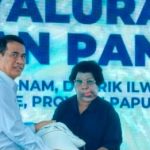
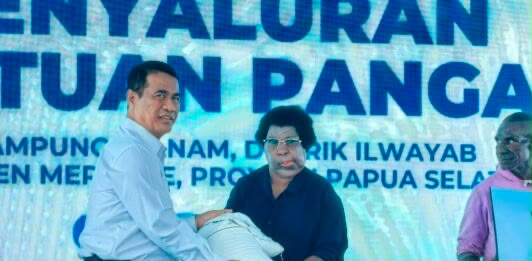
“The people of Papua have already experienced remarkable improvements in their welfare, and they are asking for even more. I have instructed them to submit their proposals, and we will prepare additional funding for next year,” Minister Amran said during a dialogue with residents in Wanam, Merauke Regency, South Papua, during his visit on Sunday (July 5, 2026).
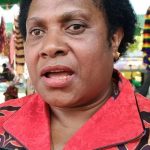
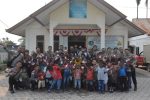
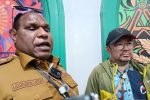
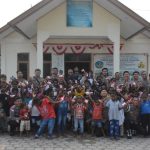
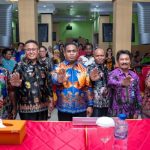
The government’s commitment was warmly welcomed by the people of Wanam. Community leader Mama Yasinta said local residents had long awaited a development program that would bring new hope to their village.
“This is the aspiration our community has long hoped and prayed for. By God’s grace, that hope has finally become a reality,” Mama Yasinta said.
Yasinta Moiwend, widely known as Mama Yasinta or Mama Sinta, is a respected community leader from the Marind indigenous tribe in Merauke. She is well known for advocating the rights of indigenous communities and protecting customary land and the environment.
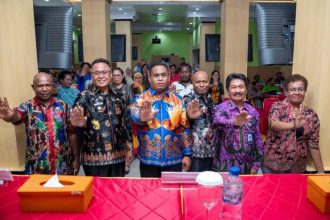
Meanwhile, Wanam Village Head and customary landowner Arnold Awalik affirmed that the community fully supports the government’s program on their customary land. According to him, the development of rice fields will provide indigenous Papuans with greater opportunities to improve their livelihoods.
“We, the Yeloko 1 and Yeloko 2 Farmer Groups of Wanam Village, fully accept the government’s program on our customary land. We already have agricultural equipment, but we do not yet have our own rice fields. We want to have our own farmland so that Papuans living in Wanam can achieve greater prosperity,” Arnold said.
Responding to the community’s aspirations, Minister Amran immediately approved the proposal to develop approximately 250 hectares of rice fields in Wanam and confirmed that construction will begin this year. The government will also provide additional tractors, build irrigation networks, and introduce modern agricultural technology to transform Wanam into a model for agricultural development in Papua.
“God willing, the project will be completed this year. We are fully responsible for it. We will send more tractors, construct irrigation systems, and implement modern agricultural technology in Wanam so that the community can enjoy better agricultural yields,” Minister Amran said.
Previously, the government had allocated Rp1.3 trillion in agricultural assistance for South Papua in 2026. The assistance includes agricultural machinery and equipment, irrigation infrastructure, farm roads, warehouses, grain dryers, and agricultural land development, all aimed at increasing productivity and improving community welfare.
Minister Amran explained that enthusiasm for agricultural development continues to grow throughout Papua. Regional leaders and farmer representatives from West Papua, Southwest Papua, Central Papua, and Highland Papua have even traveled to Jakarta to propose similar development programs for their respective regions.
Accordingly, the Ministry of Agriculture has adjusted its budget allocation to meet the specific needs of each province. Highland Papua and Central Papua, for example, will each receive 100,000 agricultural equipment packages to support the cultivation of priority commodities such as sweet potatoes. Assistance for coffee, cocoa, sago, and soybean development has also been prepared in accordance with each region’s agricultural potential.
“Thank God, we have revised the budget for the Papua we all love. We are providing 100,000 agricultural equipment packages each for Highland Papua and Central Papua, along with thousands of hectares of coffee development assistance. Everything is tailored to the needs of local communities and the strengths of each region,” Minister Amran stated.
Overall, the government has allocated approximately Rp3.2 trillion for agricultural development in Papua in 2026. Over the past two years, total government investment in Papua’s agricultural sector has reached approximately Rp5.3 trillion.
Minister Amran emphasized that all agricultural development projects are fully financed by the government and that the completed infrastructure will belong entirely to the people.
“The government finances and carries out these projects. Once completed, everything belongs to the people,” he stressed.
Through increased budget support, agricultural infrastructure development, the application of modern farming technology, and close collaboration with indigenous communities, the Ministry of Agriculture is optimistic that the agricultural sector will become a key driver of prosperity for the people of Papua while strengthening the region’s contribution to Indonesia’s national food self-sufficiency.
Apabila terjemahan ini akan digunakan sebagai siaran pers internasional, gaya bahasanya sudah disesuaikan dengan standar penulisan media berbahasa Inggris yang formal dan natural.