Jakarta – Indonesia is strengthening development in Papua’s border areas as part of broader efforts to improve economic connectivity, expand access for remote communities, and create new opportunities for local development.
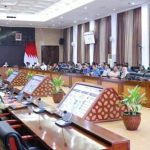
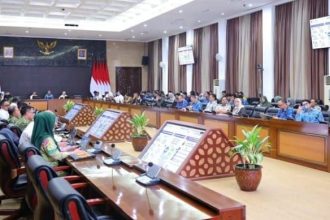
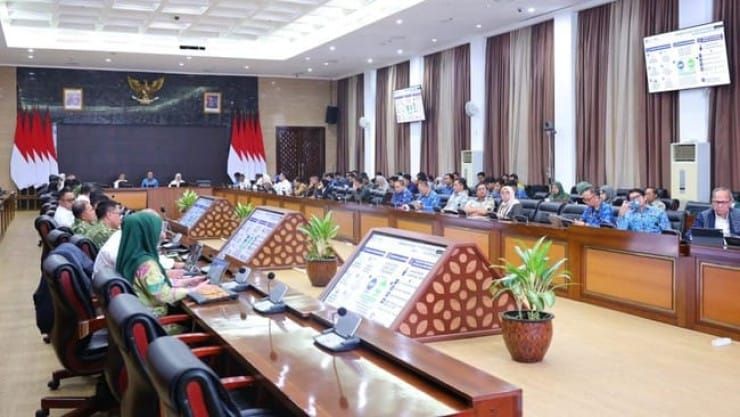
The approach was discussed at the Synchronization Forum on the Planning and Implementation of the 2025–2029 Action Plan for the Acceleration of Papua Development (RAPPP), held at the Ministry of State Secretariat of the Republic of Indonesia on Friday (October 2, 2026).
The forum brought together representatives from various ministries and institutions, including the Papua Special Autonomy Development Acceleration Steering Agency, the Executive Committee for the Acceleration of Papua Development, the Indonesian Military, the Indonesian National Police, the State Intelligence Agency, and the National Border Management Agency (BNPP).
The meeting focused on aligning development programs in Papua’s border regions so that infrastructure development, economic initiatives, and community empowerment can be implemented in an integrated and targeted manner.
BNPP Deputy for State Border Management Nurdin said three Cross-Border Posts (PLBN) are currently operating in Papua: Skouw, Yetetkun, and Sota.
He emphasized that border development should be viewed as more than the construction of facilities for the movement of people and goods.
“Pembangunan perbatasan harus dipahami sebagai upaya luas membuka keterhubungan ekonomi wilayah pedalaman Papua, khususnya dengan negara tetangga Papua Nugini,” ujarnya.
“Border development must be understood as a broader effort to open economic connectivity for Papua’s interior regions, particularly with neighboring Papua New Guinea,” he said.
Improved connectivity is expected to provide communities in remote areas with greater access to economic activities and local trade, while helping overcome geographical and infrastructure-related barriers that have limited economic growth.
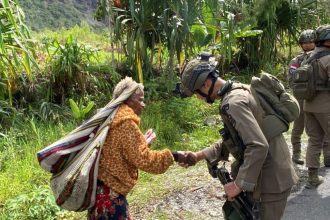
The development agenda also addresses social issues affecting communities along the border, including Papuan citizens living in Papua New Guinea who wish to return to their homeland, the fulfillment of Indigenous communities’ rights, and the strengthening of social and economic conditions for people living in border areas.
Nurdin highlighted Yetetkun as an example of a border area where communities have expressed aspirations to improve their surroundings while developing sustainable agriculture.
A family-based approach and greater involvement of Indigenous communities are considered important in strengthening social relations, reducing potential friction, and supporting the voluntary and dignified return and reintegration of residents.
The presence of PLBN facilities is therefore expected to provide benefits beyond legal border crossings. The facilities can also create opportunities for community-based trade, strengthen local economic activity, and encourage constructive social and cultural exchanges between communities on both sides of the Indonesia–Papua New Guinea border.
For this reason, connectivity between border posts and Papua’s interior regions remains a key development priority. Infrastructure development is expected to be integrated with community empowerment programs so that economic opportunities can reach communities beyond the immediate border areas.
The development needs of border communities also extend to adequate housing, healthier living environments, and opportunities for sustainable economic growth.
Through an integrated approach, border development in Papua is expected to strengthen Indonesia’s presence in its frontier regions while simultaneously contributing to economic connectivity, community empowerment, and broader development opportunities for the people of Papua.