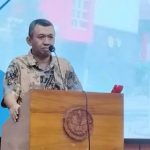
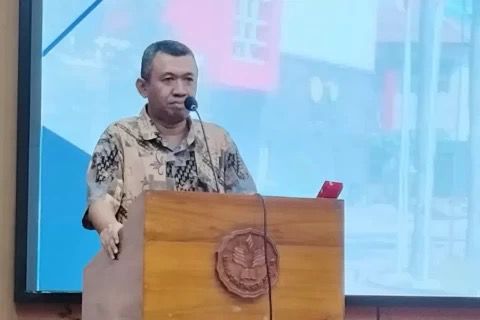
Jakarta – A Professor of Conflict Resolution and Peace Studies at Universitas Negeri Jakarta, Abdul Haris Fatgehipon, has stated that the recurring armed violence in Papua has escalated into a serious threat to humanitarian values. In this situation, he stressed that the state must be present to ensure protection for all citizens.
According to Abdul Haris, the prolonged conflict has placed civilians in the most vulnerable position. Victims include not only local residents but also security personnel, teachers, healthcare workers, and civil aviation staff who have become targets of attacks by armed criminal groups.
“When teachers, health workers, pilots, and civilians become targets, the conflict has gone beyond political and security issues. This is a humanitarian crisis that must be ended immediately,” he said on Monday (16/2/2026).
He emphasized that the state must not allow the situation to persist. In his view, armed separatist groups in Papua are not numerically large forces, but they have been able to grow due to the lack of comprehensive and consistent conflict management.
“The state must not appear to lose to guerrilla armed groups. The Indonesian National Armed Forces and the Indonesian National Police have a long history and capacity in dealing with guerrilla warfare. With technological support such as drones, detection and security measures should be carried out more effectively,” Abdul Haris said.
He also highlighted several recent violent incidents, including the killing of two civilian aircraft crew members at Koroway Airport in South Papua and the shooting of an Indonesian National Armed Forces (TNI) personnel in Tembagapura. He described these acts as serious human rights violations.
“This is a crime against humanity. The National Commission on Human Rights and international human rights institutions need to examine these cases in a balanced manner. Do not focus solely on alleged violations by state apparatus, but also on the brutal violence committed by separatist groups,” he stressed.
Furthermore, Abdul Haris urged the central government not to rely solely on a security-based approach. He believes that resolving the Papua conflict requires a comprehensive strategy, including welfare development, socio-cultural engagement, and meaningful dialogue.
“The experiences of Aceh and Maluku show that dialogue is a key factor in ending conflict. Papua must also be given a serious and dignified space for dialogue,” he said.
He warned that prolonged armed conflict could expand civilian involvement, including children and teenagers, in the use of firearms. Moreover, it could open access to transnational arms trafficking networks.
“During the Ambon conflict, we saw school-aged children capable of using firearms and even making improvised weapons. If the Papua conflict is not resolved immediately, such humanitarian risks could reoccur,” he added.
In closing, Abdul Haris stressed that the state’s attention toward Papua must not be reactive or only emerge when casualties occur and media coverage intensifies.
“The longer this conflict is left unresolved, the greater the threat to humanity and public trust. The state must be fully present, firm, and just in order to stop the violence in Papua,” he concluded.