Jakarta – Economic empowerment rooted in customary land rights and clan structures has emerged as a primary strategy to mitigate conflict and foster sustainable peace in Papua.
Harnessing the creative economy potential across the seven customary regions and advancing the downstream processing of local commodities are considered urgent priorities for improving the welfare of Indigenous Papuans (OAP).
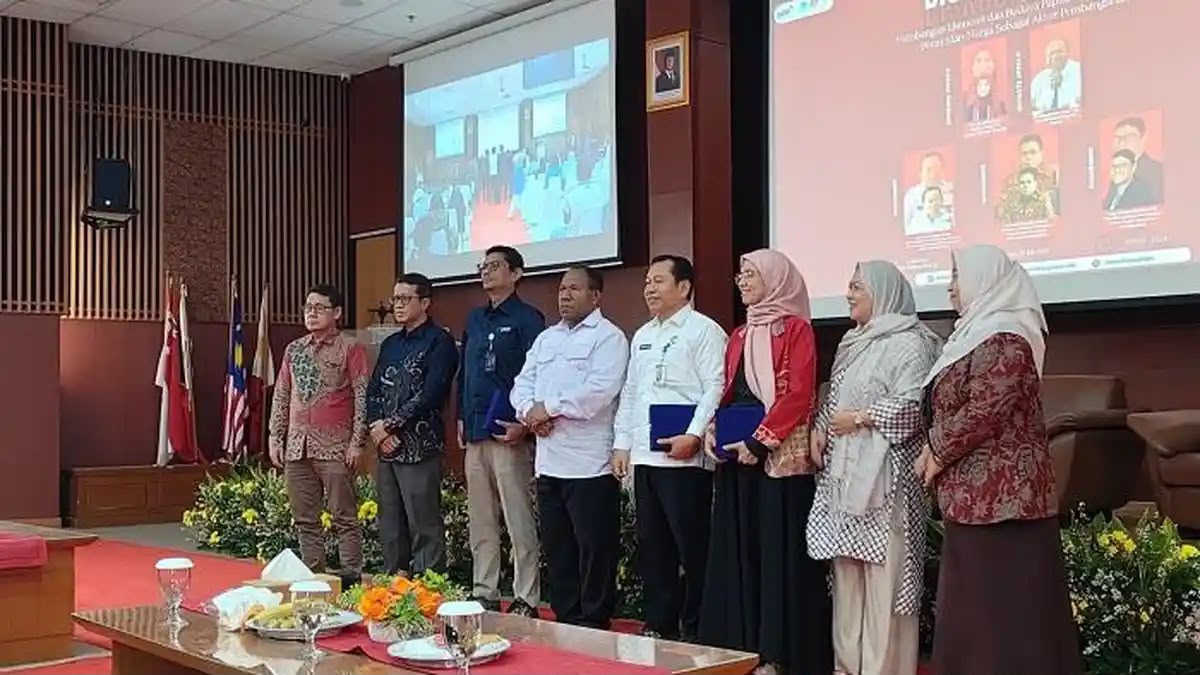
These points were highlighted during the national seminar titled “Building Papua’s Economy and Culture by Strengthening the Role of Clans as Development Actors,” held at the Bahtiar Effendy Auditorium, Faculty of Social and Political Sciences (FISIP), UIN Syarif Hidayatullah Jakarta, on Wednesday (July 29, 2026).
This significant forum brought together representatives from various ministries, academics, community leaders, and hundreds of students from the Papuan Student Association (IMAPA) Jakarta and the BP3OKP network.
During the seminar, the Ministry of Trade’s Directorate General of Domestic Trade pledged to expand market access for local Papuan products.
The central government is focusing on accelerating the downstream processing of key commodities, strengthening Micro, Small, and Medium Enterprises (MSMEs), and digitizing trade systems.
These concrete measures rely on developing efficient supply chains to boost the competitiveness of products made by Indigenous Papuans in the national market.
In tandem with this, the Ministry of Culture is leveraging local potential through the implementation of the “Papuan Cultural Pathway” initiative.
This program envisions cultural assets across the seven customary regions as a foundational resource for creative economy development.
The strategy is designed to boost the income of indigenous communities while simultaneously preserving their authentic cultural identity.
Meanwhile, the Ministry of Home Affairs is ensuring that Special Autonomy (Otsus) regulations provide greater scope for local governments.
Regional authorities now hold full control over managing development tailored to the specific characteristics of their respective areas. This policy focuses on accelerating direct economic empowerment for communities at the village level. During the dialogue session, representatives of the Papuan community and students urged the government to immediately implement tangible physical infrastructure development.
Views were expressed regarding the importance of strengthening downstream processing in the agricultural and fisheries sectors in an integrated manner.