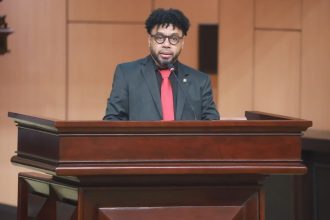
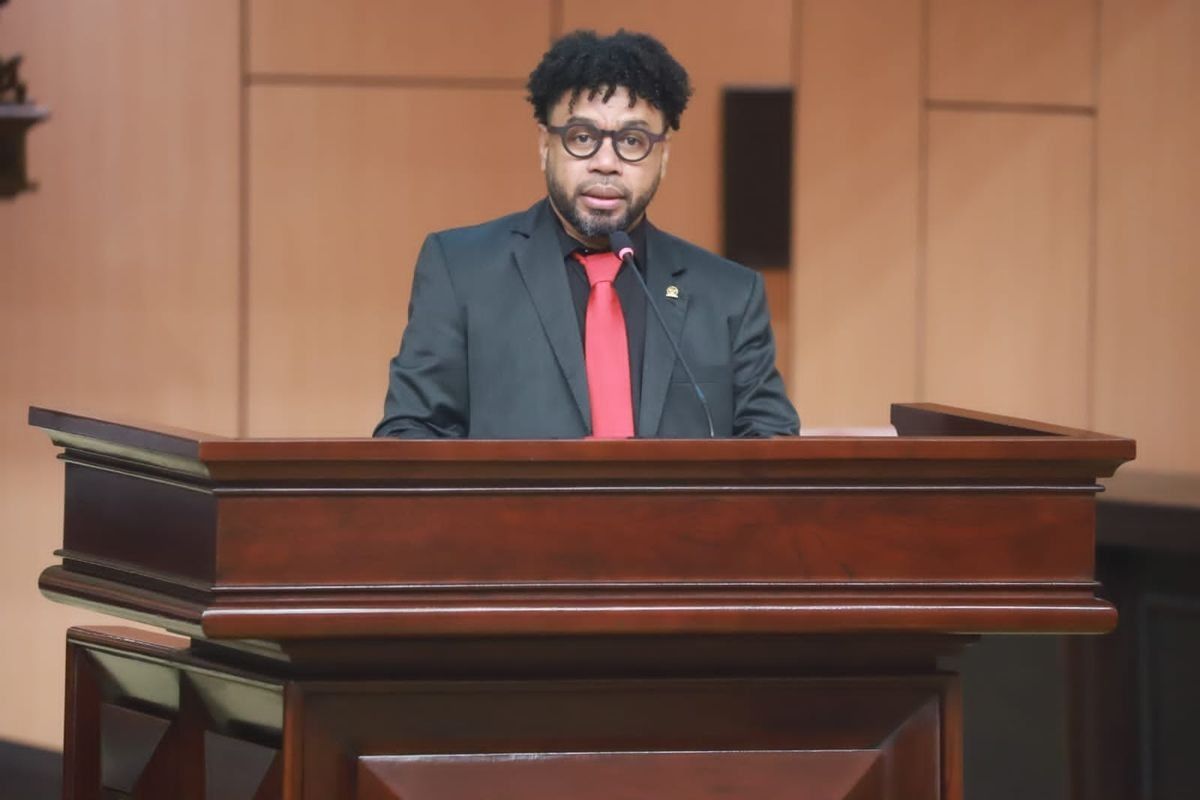
Jakarta – Filep Wamafma, Deputy Chair of the Special Committee (Pansus) on Papua at the Regional Representative Council of the Republic of Indonesia (DPD RI), has expressed his hope that the incoming Vice President will pay serious attention to resolving fundamental issues in Papua. These include the implementation of Special Autonomy (Otsus), regional development, the protection of civilians, and the welfare of Indigenous Papuans (OAP).
Filep noted that the position of Vice President holds a strategic role in overseeing development in Papua, as the officeholder serves as the Chair of the Steering Committee for the Acceleration of Development in the Special Autonomy Region of Papua (BP3OKP), as mandated by Law Number 2 of 2021.
According to him, this responsibility extends beyond mere coordination and administration; it must be translated into concrete policies capable of addressing the challenges faced by the people of Papua in a sustainable manner.
He highlighted several issues that require urgent attention, ranging from armed conflict, the protection of civilians, and the situation of displaced persons, to poverty, customary land rights, and the fulfillment of the basic rights of the population.
Filep hopes that the incoming Vice President will possess a clear roadmap for resolving issues in Papua—one that employs a comprehensive, measurable approach rooted in justice, humanity, and legal certainty.
He also called for a thorough evaluation of the 25-year implementation of Papua’s Special Autonomy, including an assessment of the effectiveness of the BP3OKP in overseeing development programs and ensuring that the benefits of these policies are genuinely felt by the local population.
Filep identified six key agendas that should be prioritized by the next Vice President: the resolution of conflicts and the protection of human rights; the rehabilitation of displaced persons and the protection of civilians; the safeguarding of customary land; an evaluation of the Special Autonomy implementation; poverty alleviation and the improvement of welfare for Indigenous Papuans; and the strengthening of dialogue between the government and the people of Papua.
“Papua requires not only accelerated development but also justice, peace, and legal certainty,” he stated. He emphasized that development in Papua must be comprehensive; it should not be oriented solely toward infrastructure, but must also address social, economic, and humanitarian aspects, as well as the protection of the rights of indigenous communities.
Filep expressed hope that the leadership transition involving the Vice Presidency could serve as a momentum to strengthen the central government’s commitment to resolving issues in Papua through consistent, measurable, and sustainable policies.
According to him, the success of development in Papua should be measured by tangible changes experienced by the local population—such as improvements in the quality of education, healthcare, and general well-being—as well as the establishment of a secure and stable environment.
Ultimately, the implementation of the Special Autonomy (Otsus) framework is expected to function as a strategic instrument to accelerate development, bolster public trust, and foster a Papua that is peaceful, progressive, and prosperous.