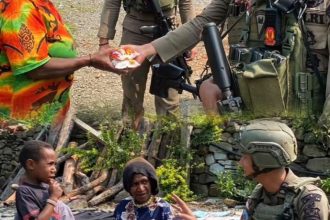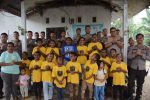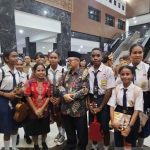
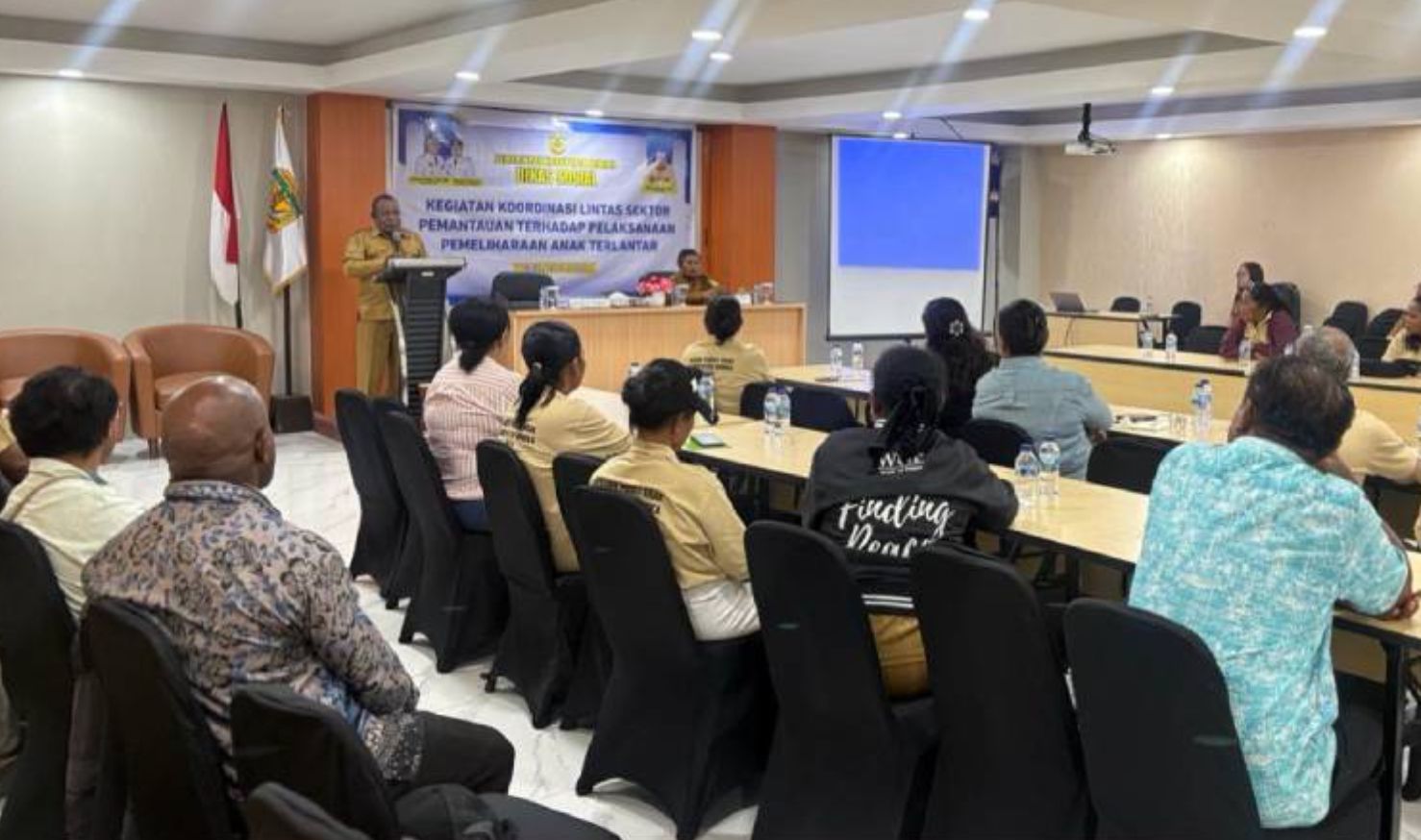
TIMIKA – The Mimika Regency Government, through its Social Affairs Office (Dinsos), continues to promote stronger cross-sector collaboration to enhance the protection and welfare of neglected children across the region.
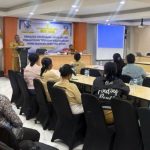
The commitment was emphasized by Head of the Mimika Social Affairs Office, Hasan Kemong, during the opening of the Cross-Sector Coordination Meeting on Monitoring the Implementation of Care for Neglected Children, held at the Grand Tembaga Hotel Ballroom in Timika on Tuesday (June 23, 2026).
Hasan stressed that addressing the issue of neglected children is a shared responsibility that requires the active involvement of multiple stakeholders. According to him, the government cannot work alone without the support of educational institutions, community organizations, religious leaders, the private sector, and local communities surrounding the children.
“Efforts to support neglected children must be comprehensive, covering education, healthcare, social protection, and the strengthening of family environments. Through strong collaboration, interventions can be carried out more effectively and sustainably,” he said.
He explained that significant challenges remain in addressing the needs of neglected children, particularly amid the various social issues faced by communities. Therefore, collective awareness and concern are needed to ensure that every child has an equal opportunity to grow and develop to their full potential.
At the same event, Head of the Mimika Office for Women’s Empowerment, Child Protection, Population Control, and Family Planning (DP3AP2KB), Johana AB Arwam, reminded participants that protecting neglected children involves more than meeting their basic needs; it also requires attention to their mental health and psychological well-being.
According to Johana, various factors—including economic hardship, family problems, and experiences of violence—can affect a child’s mental condition and increase the risk of engaging in harmful behaviors, including substance abuse.
She noted that field facilitators and community cadres play a crucial role, as they not only accompany and support children but also help identify challenges faced by families, ranging from food insecurity to inadequate housing conditions.
Through the coordination forum, the government hopes to strengthen synergy among regional government agencies, social institutions, religious organizations, and the private sector in order to develop more targeted protection programs for neglected children in Mimika Regency.
“With the support and cooperation of all stakeholders, we hope that every child will receive the protection, care, and equal opportunities needed to build a brighter future,” Johana concluded.