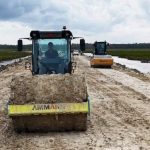
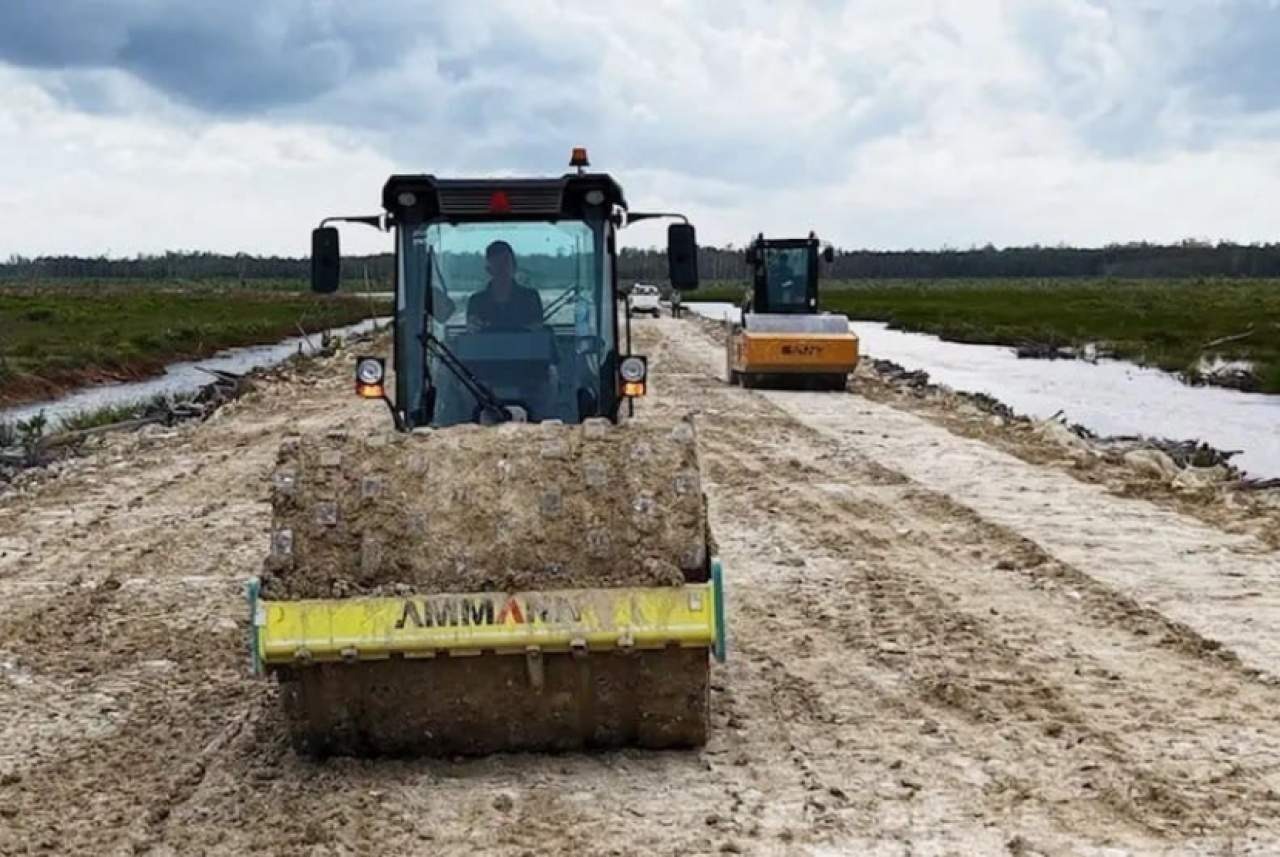
JAKARTA — The South Papua Provincial Government considers the National Strategic Project (PSN) developing in the Wanam area, Merauke Regency, to be more than just an infrastructure development project. It serves as an instrument to drive economic growth, expand employment opportunities, and improve the welfare of Indigenous Papuans (OAP).
The regional government emphasized that development success must ultimately be measured by the benefits received by the community, particularly in the form of job opportunities, increased income, and the opening of new economic activities.
South Papua Governor Apolo Safanpo stated that the various PSNs currently underway in his region are part of the government’s strategy to strengthen national food and energy security while simultaneously driving the economic transformation of South Papua.
The program includes the development of large-scale rice fields to support national food production and the development of sugarcane plantations integrated with the bioethanol industry, which is projected to become one of Indonesia’s new renewable energy hubs.
“The main goal of this development is to improve the welfare of the people. All countries carry out development with one goal in mind: to ensure a more prosperous life for their people,” said Apolo in a statement on Wednesday (June 10, 2026).
According to Apolo, the social and economic challenges that have been a challenge in Papua need to be addressed through the creation of job opportunities and improving community welfare.
Therefore, the regional government views the National Strategic Projects (PSN) in South Papua as not only building physical infrastructure, but also creating a new economic ecosystem that can directly benefit the local community.
In the energy sector, for example, the ongoing sugarcane and bioethanol plantation projects are said to have employed around 3,500 workers. This number is targeted to increase to 15,000 workers by 2027 as development and operational activities in the region increase.
The South Papua Provincial Government also requests that local communities be the primary beneficiaries of investment in the region.
“We request that around 80 percent of the workforce be from the local community, so that the benefits of development truly benefit the people of South Papua,” said Apolo.
According to him, many parties have been demanding a stronger state presence in Papua’s development. Therefore, when investment and development begin to flow, the government hopes the public will view it holistically, including the economic impacts that begin to emerge on the ground.
However, the government acknowledged that there are still differing views within the community regarding the implementation of the National Strategic Project (PSN). Some support it, seeing the economic opportunities it opens up, while others have expressed various concerns and concerns.
Apolo believes these differences are a normal part of the development process. He said that the most important thing is for the public to receive comprehensive information so they can objectively assess various projects.
Beyond economic aspects, the local government emphasized that every project is still required to comply with environmental regulations, including environmental impact analysis and sustainable environmental management and monitoring programs.
According to Apolo, development and protecting community rights should not be viewed as conflicting. They must work together so that Papua’s rich natural resources can provide greater benefits to the local community.
At the project implementation level, local community involvement is also a key focus. Gawang Kurniawan, a representative of the Wanam Project Team, stated that the implementing company is striving to build synergy with the communities surrounding the project area, including through the recruitment of local workers.
“We must involve the community, from all the clans involved. Later, perhaps we can also discuss this with the local community,” Gawang said.
According to him, the success of the project is determined not only by physical development, but also by the ability to build good relationships with the surrounding community.
The initial impacts of the development are already being felt by the residents of Wanam Village in Ilwayab District, an area that has historically faced limited access to transportation and basic facilities.
The head of Wanam Village, Kosmas Serilius, stated that several local residents have already worked on the ongoing project. He hopes that these opportunities will expand, especially for the younger generation.
“We have 743 people here, and yes, some residents work at the National Strategic Project (PSN). Perhaps in the future, many of our young people will also work there,” said Kosmas.
In addition to creating jobs, development of supporting infrastructure in the area is also ongoing. One of the main projects is the construction of logistics facilities to support the food and energy area being developed in Merauke.