South Papua – Amidst the emergence of various narratives depicting Papua solely as a region of conflict and human rights violations, the South Papua Provincial Government believes that the presence of various development projects in its territory is actually part of an effort to address the fundamental problems faced by the Papuan people, particularly regarding welfare and employment opportunities.
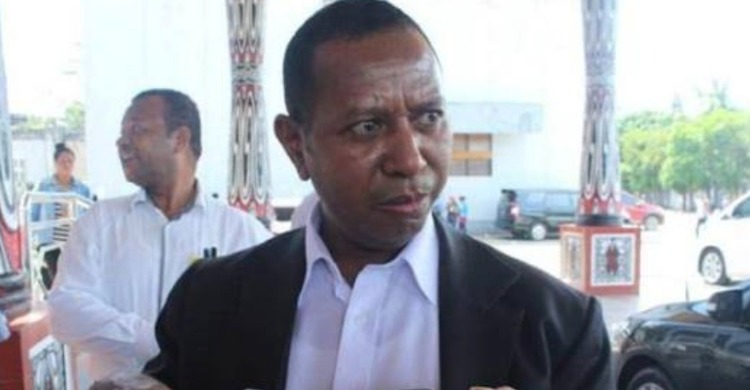
South Papua Governor Apolo Safanpo stated that the state’s presence in Papua’s development is realized through various National Strategic Projects (PSN) focused on strengthening national food and energy security.
These programs include the development of large-scale rice fields to support national rice production and the development of sugarcane plantations integrated with the bioethanol industry.
“The main goal of this development is to improve the welfare of the people. All countries carry out development with one goal: to ensure a more prosperous life for their people,” said Apolo, Wednesday (June 10, 2026).
According to him, economic development should not be halted simply because of political debates or growing opposition campaigns.
In fact, the various social issues that have long been the root of inequality in Papua must be addressed by improving community welfare.
Therefore, the National Strategic Project (PSN) in South Papua is designed not only to build infrastructure but also to create new economic opportunities that can directly benefit the local community, particularly Indigenous Papuans (OAP).
In the energy sector, for example, the integrated bioethanol sugarcane plantation project currently employs around 3,500 workers.
This number is targeted to increase to 15,000 workers by 2027. The South Papua Provincial Government is also encouraging local communities to be the primary beneficiaries of development.
The regional government is asking project implementing companies to allocate a dominant portion of labor to local workers.
“We request that around 80 percent of the workforce be from the local community, so that the benefits of development truly benefit the people of South Papua,” he said.
Apolo believes that the existence of these projects represents a tangible manifestation of the state’s presence, a demand that has long been demanded by various parties.
Therefore, development needs to be viewed holistically and objectively, including the economic impacts felt by communities surrounding the project areas.
The government, he continued, does not deny that there are differing views within the community regarding the implementation of the National Strategic Project (PSN).
Some groups support it, while others express objections. However, according to Apolo, this is a common occurrence in any development process.
The most important thing, he said, is that the community obtains complete information so they can objectively assess development programs.
“If there are those who accept or reject it, it must be based on understanding. The government’s job is to explain it clearly so the public can make an objective assessment,” he explained.
Apolo also emphasized that environmental aspects remain a priority at every stage of development.
Also read: Ambassador Ralf Beste Opens 10-Year Germany-ASEAN Cooperation Exhibition
All ongoing projects are required to comply with environmental impact analysis (Amdal) requirements and implement sustainable environmental management and monitoring programs.
For the South Papua Provincial Government, development and protecting community rights are not mutually exclusive.
Instead, the two must go hand in hand so that the Papuan people can obtain tangible benefits from the region’s rich natural resources.
With this approach, the South Papua Provincial Government hopes that the National Strategic Project (PSN) can become a long-term solution to strengthen national food security, create jobs, and increase community incomes.
It also addresses various criticisms that have arisen regarding the social and economic conditions in Papua.
“Development must be measured by improving people’s standard of living. That is our primary focus,” Apolo concluded.