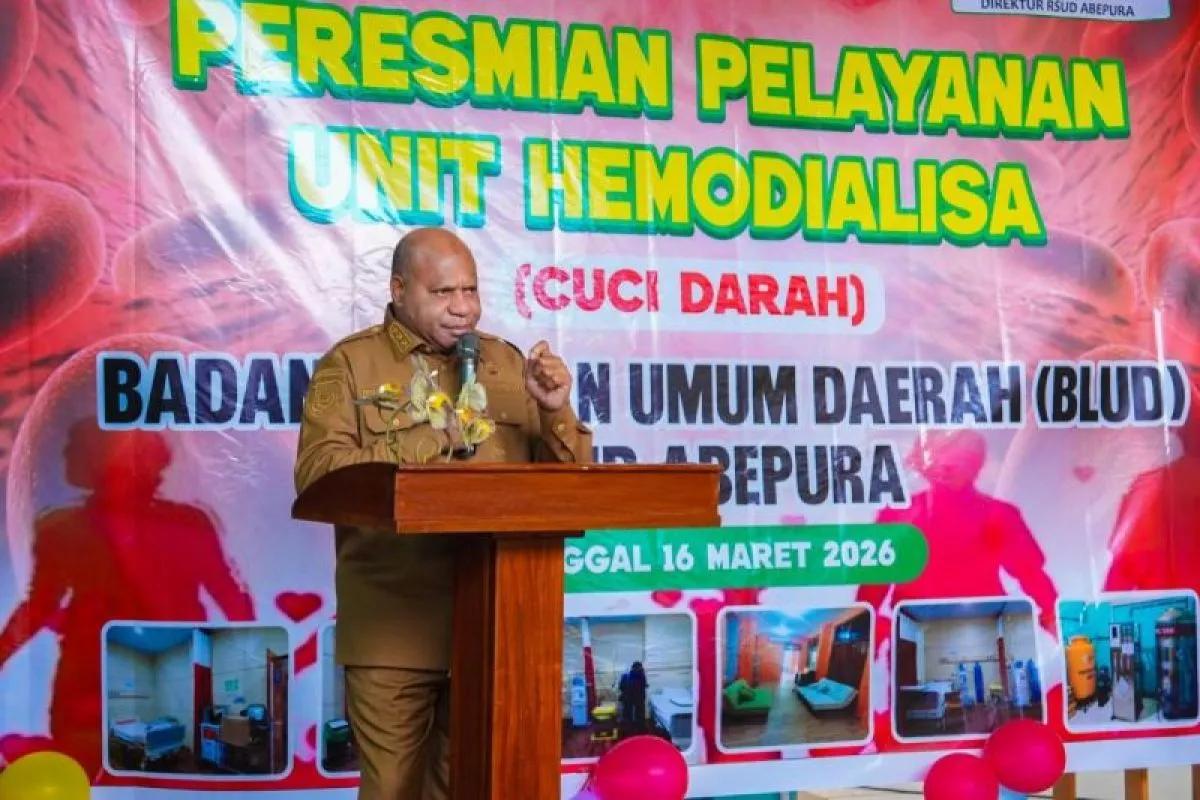
JAYAPURA – Papua Governor Mathius D Fakhiri officially inaugurated hemodialysis or hemodialysis services at Abepura Hospital, Monday (3/16/2026), as a strategic step in increasing access to health services for the public, especially kidney failure patients.
The inauguration of the hemodialysis unit is part of the local government’s commitment in strengthening health services in Papua, especially in government-owned health facilities to be able to provide more complete and quality services.
In his statement, Governor Mathius D Fakhiri emphasized that the presence of dialysis services at Abepura Hospital is an urgent need that must be fulfilled in order to answer the needs of the community.
“Abepura Hospital as a government-owned hospital should have a hemodialysis service, so that the public can get closer and more accessible services,” he said.
He explained, so far kidney failure patients in Jayapura and its surroundings often have to be referred to other health facilities that have similar services, so it takes a lot of time, cost, and effort.
With the presence of this hemodialysis unit, it is hoped that patients no longer have to travel far to get routine care, while improving their quality of life through faster and more efficient access to health services.
“The presence of this service is expected to help kidney failure patients to get medical services more easily without having to leave the area,” he added.
In addition to increasing service access, the existence of a hemodialysis unit at the Abepura Hospital is also expected to be able to reduce the burden of other referral hospitals and strengthen the health service system in the Papua region as a whole.
The Papua Provincial Government emphasized that it will continue to encourage the improvement of facilities and the quality of health services in various regions, so that all communities, including in remote areas, can receive appropriate and equitable medical services.