JAYAPURA – The commitment to uphold the integrity of the Unitary State of the Republic of Indonesia (NKRI) continues to be voiced by various Papuan figures amidst evolving political dynamics, both domestically and internationally. The public is urged not to be easily swayed by the narratives of the United Liberation Movement for West Papua (ULMWP)—including plans for a “reconciliation” ceremony in Port Vila, Vanuatu, in November 2026, which is linked to the group’s consolidation efforts.
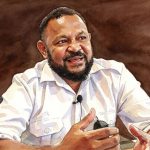
Max Abner Ohee, a Papuan youth leader, emphasized that the public must understand Papua’s status as a legitimate part of Indonesia. According to him, the political agendas promoted by certain groups do not necessarily reflect the will of the entire Papuan population. Therefore, information regarding Papua should be approached critically, with due consideration for historical and legal foundations.
“Papua is Indonesia; this is a legitimate and final reality, as affirmed by UN Resolution 25/24. West Irian—now known as Papua and West Papua—is rightfully a part of the NKRI, and this status is indisputable,” asserted Max Abner Ohee, as quoted on Monday (November 16, 2026).
Beyond maintaining unity, Max believes that the future of Papua should focus on strengthening human resources and improving general welfare. Education, economic development, and the creation of opportunities for the younger generation are essential factors that will enable the people of Papua to play a greater role in national development.
Echoing this sentiment, Papuan leader and Ondofolo (traditional chief) Yanto Eluay cautioned the public against being easily influenced by information designed to foster negative perceptions of Papua. He stressed that issues concerning human rights violations should be viewed objectively, rather than being exploited for the political interests of specific groups. “Issues regarding human rights violations in Papua are propaganda employed by the ULMWP group and its sympathizers to deceive the Papuan people at large; in reality, the Indonesian government is actively fostering human resource, infrastructure, and economic development in the land of Papua,” stated Yanto Eluay.
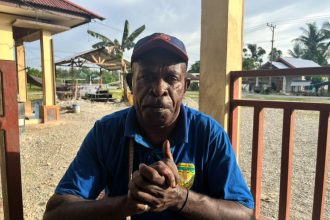
From the perspective of the indigenous community, Kaleb Sawen—the Ondoafi (traditional leader) of Bagaiserwar—identifies the younger generation as a primary force in maintaining social harmony. He urges the youth of Sarmi Regency to adopt traditional values, the principles of Pancasila, and a spirit of brotherhood as a foundation for navigating various influences that could potentially divide society.