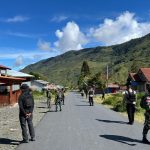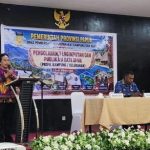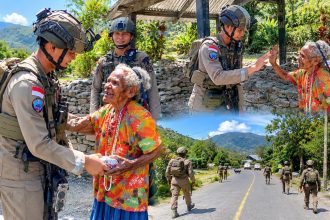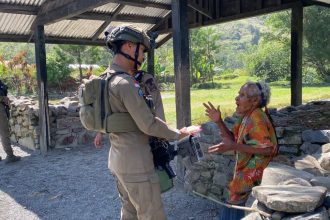
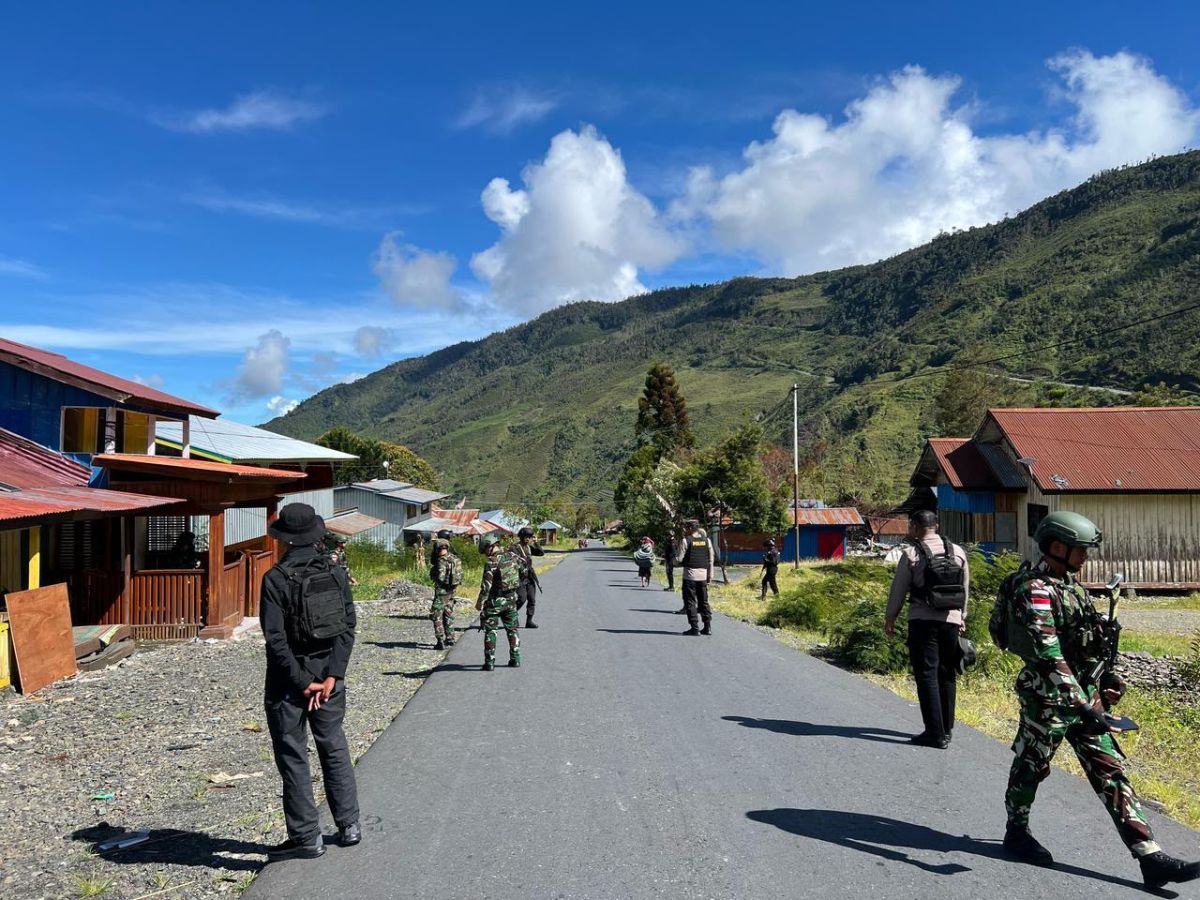
Jakarta – A secure and conducive environment serves as a vital foundation, ensuring that development, public services, education, healthcare, and economic activities in Papua can continue without disruption.
Consequently, the public is urged not to provide any space for provocations, violence, or information that could incite unrest and escalate tensions within the community.
Karmin Yikwa, an indigenous community leader from Tolikara, previously emphasized that security is in the long-term interest of the Papuan people.
“Security stability is the most valuable asset for ensuring the future well-being of our children and grandchildren in Tolikara,” Karmin asserted.
According to him, indigenous communities desire a safe and peaceful life, which would allow development to progress and improve the welfare of the people. The younger generation is also encouraged not to be easily swayed by propaganda, but rather to prioritize education and dialogue as tools for building Papua.
Similar sentiments have emerged following a series of security disturbances affecting civilians and public service personnel in Papua. Sukamta, Deputy Chair of Commission I of the House of Representatives (DPR), noted that the rise in attacks against civilians necessitates stronger early detection and protection for the public.
“As the number of civilian targets grows, so does the urgent need to enhance early detection and public protection. We must not wait for further casualties before taking action. This is an opportune moment for the central government, local governments, and the community to work together to improve security and the well-being of all people in Papua, without exception,” he stated.
Strengthening security must go hand-in-hand with development and the provision of public services. This approach involves not only responding to violence but also preventing the emergence of tensions through community communication, the careful filtering of information, and the peaceful resolution of differences.
An Ondofolo (traditional leader) in Jayapura has also urged the public not to be provoked by the agenda of the KNPB (West Papua National Committee), which is seen as having the potential to disrupt order and peace in Papua. Indigenous leaders emphasize that while expressing one’s aspirations is a right held by every citizen, it must be done in an orderly manner—respecting both the law and customary traditions—without resorting to anarchic actions that could harm the community.
Furthermore, it is important to ensure that aspirations voiced by specific groups are not automatically perceived as the stance of the entire indigenous Papuan community. This distinction is crucial to prevent the assumption that any agenda or action taken by the KNPB represents the interests of all Indigenous Papuans (Orang Asli Papua/OAP).
Marthen Ohee, the Ondofolo (traditional leader) of Asei Besar Village, asserts that the indigenous community maintains its own distinct position and perspective regarding various agendas presented in the name of the Indigenous Papuan people.
“Even though they claim to speak on behalf of the Indigenous Papuan community, from the perspective of our customary traditions, we say no—that is merely the desire of a specific group of people,” he stated firmly.