By Narik Yimin Tabuni
Education Observer and Chairman of the Pena Papua Foundation
Investing in human capital is one of the most valuable strategies for national development. In Papua, education is regarded not just as a pathway to progress but as a sacred commitment to empower indigenous people to lead on their own land.
This conviction echoes the wisdom of early pioneers in the region.
“On this rock, I place the civilization of the Papuan people. Even if others possess great intelligence, wisdom, and understanding to lead this nation, it is the Papuan people who will rise and lead their own nation,” said Rev. Isack Samuel Kijne, a renowned figure in Papua’s history.
His words carry the hope that young Papuans will deeply understand their cultural philosophy, social structure, and the history of their people.
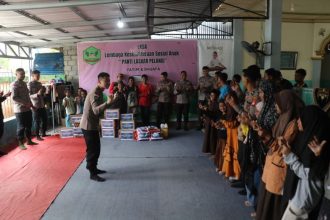
In response to the challenges facing education in the highlands, the “Puncak Cerdas dan Unggulan” (Smart and Outstanding Puncak) scholarship program has been initiated by the Puncak Regency Government. The initiative targets students and university learners from the regency and is the result of a formal partnership with the Bina Teruna Bumi Cenderawasih Foundation (Binterbusih).
Founded on January 12, 1988, in Jakarta by a group of young Papuan clergy, Binterbusih is an independent, non-political, nonprofit organization focused on educating and developing future Papuan leaders. Over the years, the foundation has produced notable figures, such as a former Minister for Human Rights, governors, regents, vice regents, secretaries of regional governments, and more.
Binterbusih collaborates with various stakeholders including the local governments of Pegunungan Bintang and Puncak, YPMAK, Freeport Indonesia, and numerous universities and hospitals across Java and Bali.
Since Puncak Regency was established under Law No. 7 of 2008, security instability has posed major barriers to access and quality in education. In the early years, scholarship aid was provided annually to students from the third semester onward. Later, the system shifted to a digital platform where eligibility was verified through official documents such as family cards and national ID numbers.
The most recent transformation has introduced a full scholarship system, in collaboration with Binterbusih in Semarang. Every student under this program receives comprehensive support—including monthly stipends, medical coverage, tuition fees, leadership training, character building programs, and more—all fully funded by the Puncak government and directly managed by Binterbusih.
“I express my highest appreciation to the Puncak Regency Government for this noble initiative,” said Narik Yimin Tabuni, a prominent education advocate from Papua.
“We all hope that children go to school. The younger generation must pursue their dreams through education,” he added.
Under this initiative, students are encouraged to choose study fields based on the needs of the region and their own potential, while families are relieved of financial burdens.
“With this program, parents no longer worry about education costs, regardless of the major. All expenses are covered by the government through Binterbusih Foundation,” Tabuni explained.
This initiative is spearheaded by Regent Elvis Tabuni and Vice Regent Naftali Akawal, with full support from Regional Secretary Nenu Tabuni, Pilot Cap Amianus Wamang, and a dedicated team.
A total of 123 students are currently being prepared to travel to Semarang, Central Java, to pursue their education under the full scholarship scheme.
“This is a noble program carried out by the Puncak Regency Government through Regent Elvis Tabuni and Vice Regent Naftali Akawal, with direct support from Secretary Nenu Tabuni, Pilot Cap Amianus Wamang, and their team, who are working tirelessly to improve education in Papua—especially in Puncak,” Tabuni said.
He hopes that the success of this model will inspire other conflict-affected areas in Papua, especially Nduga, to adopt similar policies.
“Seeing the success of this breakthrough, I hope other related regions like Nduga will do the same. Due to prolonged conflict, children in Nduga have been neglected. Dropout rates, illiteracy, and low education indicators like school participation and human development index are alarming,” he said.
“It is crucial to apply the same model so that every child can access education freely, and parents are no longer burdened by tuition and other fees,” he concluded.
For Tabuni, the way forward for Papua must be shaped by Papuans themselves—through collaborative, inclusive, and culturally rooted educational efforts.